When Should You See a Nephrologist in Mumbai?

When Should You See a Nephrologist in Mumbai? Signs, Kidney Test Results and When to Get Help
If your routine health checkup has flagged rising serum creatinine, protein in your urine, a low eGFR, or blood pressure that remains high despite treatment, it may be time to look beyond another routine checkup.
Kidney problems can progress with few symptoms in the early stages. By the time swelling, major changes in urination, severe weakness, or breathlessness develop, kidney function may already be affected.
A Nephrologist in Mumbai evaluates medical conditions affecting kidney function, including chronic kidney disease, diabetic kidney disease, difficult-to-control blood pressure, protein in the urine, and electrolyte problems.
The key question is not simply, “Is my creatinine high?”
It is, “Why has my kidney function changed, and what should I do next?”
What Does a Nephrologist Treat?
Nephrology is the branch of medicine focused on kidney function and diseases that affect the kidneys.
A nephrologist commonly evaluates and manages:
- Chronic kidney disease
- Acute kidney injury
- Diabetic kidney disease
- High blood pressure related to kidney disease
- Protein or albumin in urine
- Blood in urine when a kidney cause is suspected
- Electrolyte disturbances
- Glomerular diseases
- Nephrotic syndrome
- Kidney complications related to autoimmune conditions
- Advanced kidney failure
- Dialysis-related care
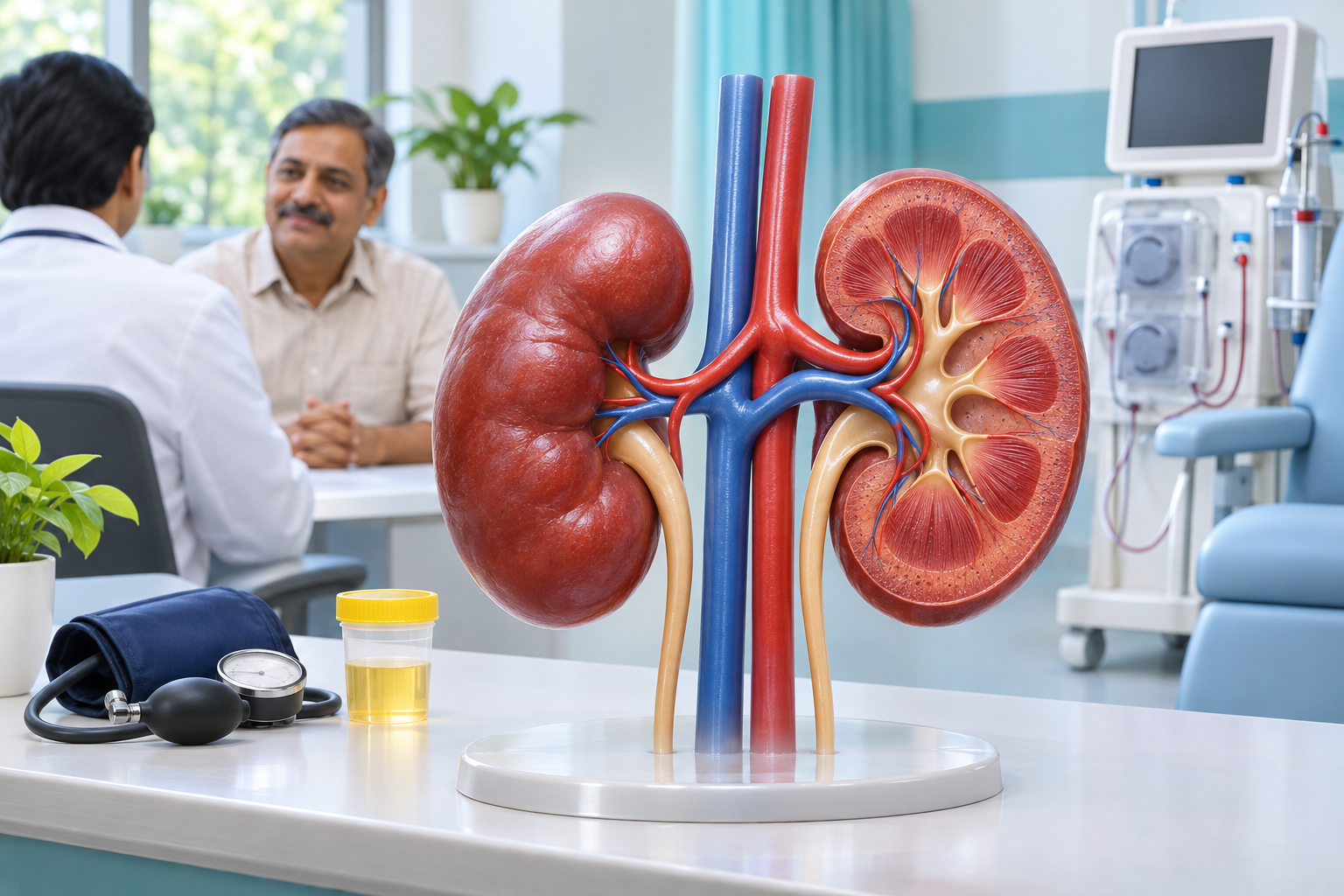
Nephrology is different from urology.
A urologist primarily manages structural and surgical conditions of the urinary system, such as urinary obstruction, certain kidney stones, prostate problems, and urinary tract surgery.
A nephrologist focuses mainly on how well your kidneys are functioning and medical diseases affecting kidney tissue.
Which Kidney Test Results Should Make You Seek Medical Advice?
Many people first become concerned about their kidneys after receiving an abnormal blood or urine report.
Instead of focusing on one number, doctors usually interpret kidney results together and compare them with your previous reports.

1. Serum Creatinine Is Rising
Creatinine is a waste product measured through a blood test and is commonly used to assess kidney function.
A rising creatinine level compared with your previous baseline deserves medical evaluation.
Some laboratories may flag values around 1.3 mg/dL or higher in men and around 1.1 mg/dL or higher in women, but reference ranges vary. Creatinine is also influenced by age, sex, muscle mass, hydration, medications, and other factors.
The trend often matters more than a single number.
For example, a change from 0.8 mg/dL to 1.3 mg/dL may deserve attention even if the laboratory report does not mark it as severely abnormal.
2. eGFR Is Below 60
Estimated glomerular filtration rate, or eGFR, provides an estimate of how effectively your kidneys are filtering blood.
An eGFR below 60 mL/min/1.73 m² that persists for at least three months can meet one of the criteria used to diagnose chronic kidney disease.
A single low result needs clinical interpretation because dehydration, acute illness, medications, and other temporary factors can affect kidney function.
If your eGFR remains low or continues to decline, a Nephrologist in Mumbai can investigate the cause and assess the risk of further kidney function loss.
3. Protein or Albumin Is Found in Your Urine
Healthy kidneys normally prevent significant amounts of protein from leaking into urine.
If your urine report repeatedly shows “trace,” “1+,” or “2+” protein, your doctor may recommend a more specific test.
One commonly used test is the urine albumin-to-creatinine ratio, or UACR.
A UACR of 30 mg/g or higher can indicate increased albumin in the urine and deserves appropriate follow-up, particularly in people with diabetes or hypertension.
Persistent protein leakage can be an early sign of kidney damage even when your creatinine is still within the laboratory reference range.
When Should You See a GP, Urologist or Nephrologist?
Patients often know something is wrong but are unsure which specialist to consult.
Here is a practical starting point.

| Situation | Who to See First | Reason |
|---|---|---|
| First mildly abnormal creatinine result | General Physician / MD Internist | Can review possible dehydration, illness, medicines and arrange repeat testing |
| Burning urination or suspected urinary infection | General Physician / Urologist | Evaluation depends on severity, recurrence and suspected urinary tract problem |
| Recurrent kidney stones or urinary obstruction | Urologist | Often involves structural evaluation and procedural treatment |
| eGFR below 60 that remains low | Nephrologist | Needs evaluation for chronic kidney disease and its cause |
| Persistent protein or albumin in urine | Nephrologist | May indicate kidney damage requiring further assessment |
| Diabetes with declining kidney function | Nephrologist | Requires kidney-focused risk assessment and treatment planning |
| Difficult-to-control hypertension with kidney abnormalities | Nephrologist | Kidney disease can contribute to hypertension and vice versa |
| Advanced kidney disease or dialysis needs | Nephrologist | Requires specialized kidney care |
The right specialist may change depending on your test results and symptoms.
In some cases, nephrologists and urologists work together.
Signs That Should Prompt a Kidney Evaluation
Kidney disease does not always produce obvious symptoms early.
Still, certain changes deserve attention, especially when they occur alongside abnormal kidney tests.

Swelling Around Your Feet or Ankles
Kidney dysfunction can contribute to sodium and fluid retention.
You may notice ankle swelling, puffiness around your eyes, tighter footwear, or rapid changes in body weight due to fluid accumulation.
Foamy or Frothy Urine
Occasional bubbles in urine can occur normally.
Persistent or unusually foamy urine may sometimes be associated with increased protein in the urine.
A urine test can help determine whether protein leakage is present.
Changes in Urination
Pay attention to persistent changes such as:
- Passing much less urine than usual
- Increased urination at night
- Blood in the urine
- Persistent foamy urine
- Major changes in urinary frequency
These symptoms can have several causes, so evaluation should focus on identifying the underlying problem.
Persistent High Blood Pressure
Your kidneys and blood pressure are closely connected.
Kidney disease can contribute to hypertension, while uncontrolled hypertension can damage kidney blood vessels over time.
If your blood pressure remains above your treatment target despite taking prescribed medicines, particularly when kidney tests are abnormal, a Nephrology assessment may be appropriate.
Who Should Be More Proactive About Kidney Screening?
You may need closer kidney monitoring if you have:
- Diabetes
- High blood pressure
- Heart disease
- Obesity
- Previous acute kidney injury
- Recurrent kidney problems
- A family history of kidney disease
- Long-term exposure to medicines that may affect kidney function

People with diabetes and hypertension deserve particular attention because these conditions are major contributors to chronic kidney disease.
Regular kidney screening may include serum creatinine, eGFR, urine testing, and UACR depending on your risk profile.
If results begin changing, early consultation with a Nephrologist in Mumbai can help establish the cause and create an appropriate management plan.
What Should You Carry to Your First Nephrology Appointment?
A little preparation can make your consultation much more useful.
If available, carry:
- Current and previous kidney function tests or RFT/KFT reports
- Serum creatinine and eGFR reports
- CBC reports
- Urine routine and microscopy reports
- UACR or urine protein-to-creatinine ratio reports
- Recent blood sugar and HbA1c reports if you have diabetes
- Previous blood pressure records
- Ultrasound KUB reports
- Hospital discharge summaries
- Previous kidney-related prescriptions
- A complete list of medicines and supplements you currently take

Bring older reports too.
A nephrologist often learns more from how creatinine, eGFR, urine protein, potassium, and blood pressure have changed over time than from one recent report.
Do not forget non-prescription medicines and supplements. Mention any regular painkiller use as well.
What Happens During a Nephrology Consultation?
Your first visit is usually focused on finding the cause and understanding your current level of kidney function.
The doctor may review your medical history, diabetes control, blood pressure, medicines, family history, previous illnesses, urinary symptoms, and past laboratory results.
Depending on the findings, further tests may include repeat kidney function tests, urine protein measurement, electrolyte tests, ultrasound imaging, or other investigations.

Not every patient needs an extensive set of tests.
The aim is to answer three practical questions:
- What is affecting your kidneys?
- Is the problem temporary, stable, or progressing?
- What can be done to protect your remaining kidney function?
At Dr Das Multispeciality Hospital, patients with abnormal kidney reports, hypertension, diabetes-related kidney concerns, or suspected chronic kidney disease can seek clinical evaluation and appropriate specialist guidance.
Can Early Kidney Care Help Slow Chronic Kidney Disease?
In many patients, yes.
The treatment depends on the cause and stage of kidney disease.
Management may involve controlling blood pressure, improving diabetes management, reducing excessive dietary sodium, reviewing medicines, treating the underlying kidney condition, and using kidney-protective medication when clinically appropriate.

Early Nephrology care is particularly useful because the goal is not only to treat current abnormalities.
It is also to reduce the risk of further kidney function decline and complications.
You do not need to wait until kidney disease becomes severe before discussing your reports with a specialist.
Frequently Asked Questions
Get Your Kidney Reports Reviewed Before the Numbers Worsen
An abnormal kidney report is more useful when interpreted as part of a pattern rather than as an isolated number.
Rising creatinine, persistent eGFR below 60, protein in the urine, diabetes-related kidney changes, swelling, or difficult-to-control blood pressure are reasons to seek timely medical evaluation.
If you are looking for a Nephrologist in Mumbai, bring your current reports as well as older KFT, urine, blood pressure, diabetes, and ultrasound records. Comparing these results can help determine whether your kidney function is stable or changing.
For patients seeking kidney evaluation at Dr Das Multispeciality Hospital, a Nephrology consultation can help identify the cause of abnormal results and plan the next steps based on your individual condition.
Book a Nephrology Consultation at Dr Das Multispeciality Hospital
Bring your latest KFT/RFT, urine reports, medication list, blood pressure records, and previous kidney investigations for a more focused consultation.