UTI Diagnosis: Which Tests Help Detect Urinary Tract Infection? | Dr. Gaurav D. Das

UTI Diagnosis: Which Tests Help Detect Urinary Tract Infection? | Dr. Gaurav D. Das
Burning urination starts in the morning. By afternoon, you are visiting the bathroom every 20 minutes. You suspect a urinary tract infection (UTI), but should you start antibiotics or get tested first? The answer matters because not every urinary symptom indicates an infection, and the wrong treatment can delay recovery. A urine test can help distinguish a bacterial UTI from other conditions. Understanding which tests you need, what your reports mean, and when further investigation becomes necessary can help you make informed decisions.
How Do Doctors Confirm a Urinary Tract Infection?
UTI diagnosis begins with your symptoms, medical history, and clinical examination. Your doctor may recommend urine routine examination, urine culture, or additional investigations depending on the suspected infection.
In Urology, doctors also assess whether kidney stones, urinary blockage, or bladder-emptying problems could be contributing to your symptoms.
A Urologist in Mumbai may recommend further evaluation when infections keep returning, symptoms persist after treatment, or signs suggest kidney involvement.

The most common tests used for UTI diagnosis include:
| Diagnostic test | What it helps identify | When it is useful |
|---|---|---|
| Urine routine and microscopy | White blood cells, red blood cells, bacteria | Initial evaluation of urinary symptoms |
| Urine dipstick | Nitrites and leukocyte esterase | Quick screening |
| Urine culture and sensitivity | Bacteria and antibiotic susceptibility | Recurrent, complicated, or persistent UTI |
| Blood tests | Kidney function and signs of systemic infection | Suspected severe or kidney infection |
| Ultrasound or CT scan | Stones, blockage, and complications | Selected patients with concerning findings |
Not every patient requires all these tests. The goal is to identify the infection accurately without unnecessary investigations.
At Dr Das Multispeciality Hospital, patients seeking evaluation for urinary symptoms can discuss appropriate investigations based on their clinical findings.
1. Urine Routine and Microscopy: Understanding Your UTI Report
A urine routine and microscopy test is commonly requested when someone reports burning urination, urgency, or lower abdominal discomfort.
It examines your urine for signs of inflammation, infection, and bleeding.

Decoding Your Urine Test Report
| Report finding | Typical reference finding | What an abnormal result may mean |
|---|---|---|
| White blood cells (WBCs) | Often 0–5 per high-power field | Increased cells may indicate inflammation or infection |
| Red blood cells (RBCs) | Often 0–2 per high-power field | May occur with infection, stones, or other conditions |
| Nitrites | Negative | Positive results suggest certain urinary bacteria |
| Leukocyte esterase | Negative | Suggests white blood cells in urine |
| Bacteria | None or few | May indicate infection or sample contamination |
Reference ranges vary between laboratories.
A raised WBC count alone does not confirm a UTI. Doctors interpret the results alongside your symptoms.
For accurate collection, use a sterile container and provide a clean-catch, midstream urine sample as instructed.
2. Urine Culture and Sensitivity: Finding the Right Antibiotic
A urine culture identifies bacteria growing in your urine. The sensitivity test helps determine which antibiotics are likely to work against them.
This becomes particularly useful when symptoms persist, infections recur, or the patient has risk factors for complications.
A urine culture usually takes 24–72 hours, although some results require longer.

What Should You Do While Waiting for Your Culture Report?
You may still need treatment before the final report arrives.
For a typical uncomplicated bladder infection, your doctor may prescribe an antibiotic based on your symptoms and local treatment guidelines.
If you have recurrent infections, recent antibiotic exposure, or unusual symptoms, your doctor may prioritise collecting a culture before treatment and then adjust the medicine when results arrive.
While waiting:
- Drink enough fluids to maintain normal hydration.
- Use pain relief only as advised by your healthcare professional.
- Avoid taking leftover antibiotics or someone else's prescription.
- Contact your doctor if symptoms worsen or do not improve.
Cranberry juice is not a treatment for an active bacterial UTI.
Fever, chills, vomiting, or pain near your kidneys requires prompt medical attention rather than waiting for the laboratory report.
3. Urine Dipstick: A Quick Screening Test
A urine dipstick provides results within minutes and can support an initial UTI assessment.
It mainly checks for two indicators.
Nitrites may appear when certain bacteria are present. Leukocyte esterase suggests white blood cell activity in urine.
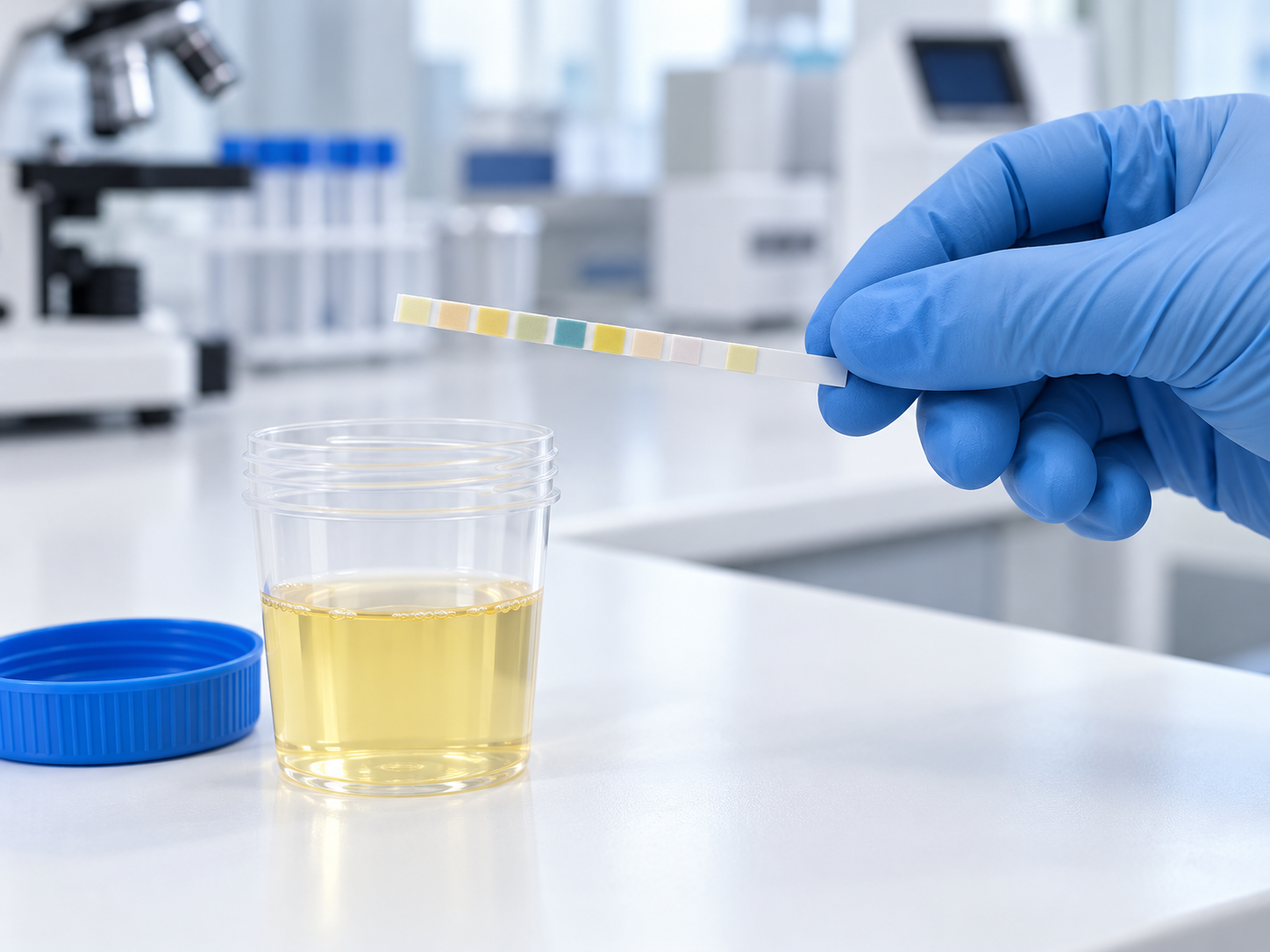
A positive result can support the diagnosis when symptoms match.
A negative result does not completely exclude infection. Some bacteria do not produce nitrites, and frequent urination may affect detection.
For patients with persistent symptoms or uncertain findings, urine microscopy and culture can provide further information.
4. When UTI Symptoms Require Blood Tests or Imaging
Simple bladder infections and complicated urinary infections need different approaches.
Doctors look for warning signs before deciding whether blood tests, ultrasound, or CT imaging are necessary.

UTI Testing Based on Symptoms
| Clinical situation | Likely next step |
|---|---|
| Burning urination and urgency without fever in an otherwise healthy, non-pregnant woman | Clinical assessment, with urine testing when indicated |
| Fever, chills, and pain in the side or back | Prompt assessment for kidney infection, urine culture, and possible blood tests |
| Severe flank pain with suspected urinary stone | Imaging to assess for stones or obstruction |
| Persistent fever despite treatment | Reassessment, culture review, and possible imaging |
| Low blood pressure, confusion, or severe weakness | Emergency hospital assessment |
Blood Tests
A complete blood count may show increased white blood cells, although this does not confirm a urinary infection.
Creatinine testing helps assess kidney function when doctors suspect kidney involvement or obstruction.
Blood cultures may be needed in severe infections.
Ultrasound and CT Scan
Ultrasound can identify kidney swelling, some urinary stones, and bladder-emptying problems.
CT imaging may be required when doctors suspect an obstructing stone, abscess, or another complication.
A suspected infected, obstructed kidney is a medical emergency and may require urgent drainage.
Imaging decisions depend on clinical findings. A CT scan is not automatically necessary for every patient with fever or a UTI.
5. Recurrent UTIs: Why the Infection Keeps Returning
Having another UTI shortly after treatment can be frustrating. Repeated infections also raise an important diagnostic question: Is this a new infection, or did the previous infection fail to clear?
Recurrent UTI generally means two infections within six months or three within twelve months.
For women experiencing repeated episodes, doctors usually recommend documenting symptoms and obtaining urine cultures to confirm bacterial infection.

What Should Be Checked?
A recurrent UTI evaluation may include:
- Reviewing previous culture reports and antibiotics
- Checking for incomplete bladder emptying when suspected
- Assessing menopausal changes and vaginal symptoms
- Reviewing sexual activity-related infection patterns
- Investigating stones or anatomical problems when clinically indicated
Routine cystoscopy and imaging are not required for every otherwise healthy woman with recurrent uncomplicated UTIs.
Can Recurrent UTIs Be Prevented?
Depending on your medical history, a doctor may discuss vaginal oestrogen for eligible postmenopausal women, behavioural measures, or preventive medication.
For infections consistently linked to sexual activity, selected patients may benefit from clinician-prescribed post-coital antibiotic prophylaxis.
Preventive antibiotics should follow an individual risk assessment, preferably supported by previous culture results.
6. What Happens When UTI Tests Are Negative but Symptoms Continue?
Persistent burning urination does not always mean an antibiotic-resistant UTI.
A negative urine culture may prompt your doctor to investigate other conditions.
These include urethritis, sexually transmitted infections, vaginal inflammation, urinary stones, and bladder pain syndrome.
Your doctor may recommend targeted testing based on your symptoms, examination, and previous reports.

Repeated antibiotic courses without identifying the cause can expose you to side effects and contribute to antibiotic resistance.
An accurate diagnosis is more useful than treating every episode of urinary discomfort as a bacterial infection.
Frequently Asked Questions About UTI Diagnosis
Get an Accurate UTI Diagnosis and Appropriate Treatment
A urinary tract infection should not be diagnosed through symptoms or laboratory numbers alone. Urine microscopy, dipstick testing, and urine culture help doctors assess bacterial infection, while blood tests and imaging are reserved for selected situations. Recurrent infections require a closer review of previous cultures and possible underlying causes. If urinary symptoms persist, return frequently, or occur with fever and flank pain, seek medical evaluation. Dr. Gaurav D. Das can help assess your urinary concerns and guide the next steps based on your clinical needs. The right diagnosis is the starting point for safe and appropriate treatment.